Everest Base Camp Trek: A Practical Guide for First-Timers
There is a version of the Everest Base Camp story that circulates widely: fit person decides to go, trains for a few months, does the trek, posts the photos. What that version leaves out is the first-timers who turned back at Dingboche, or spent two days in Namche unable to eat, or made it all the way to Base Camp and barely registered it because altitude had reduced their capacity to feel much of anything.
This guide is for people who want to go to EBC and finish it. That means being honest about what it actually involves.
What the Trek Is
Everest Base Camp sits at 5,364 metres above sea level. The trek starts with a flight into Lukla airport (2,860m) and takes most trekkers 12 to 14 days round trip with proper acclimatization. You are not summiting Everest. You are walking to the base of the mountain where expedition teams stage their climbs.
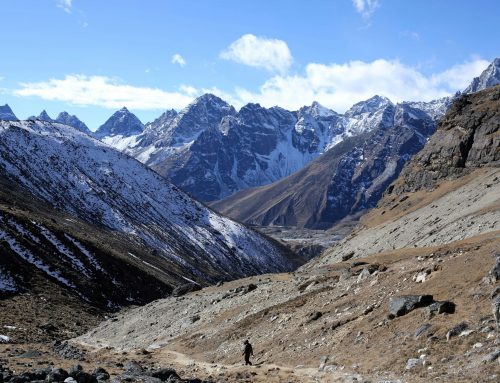
The trail is a walked path through high Himalayan terrain. No technical climbing, no ropes, no crampons required. What it requires is a genuine respect for altitude and a realistic approach to pacing.
The Altitude Reality
At 5,000 metres, the air contains roughly half the oxygen available at sea level. This affects everyone, including people who are extremely fit. The relationship between fitness and altitude tolerance is unreliable. Athletes have been evacuated from EBC. Sedentary travellers have reached the top without a headache.
Acute mountain sickness (AMS) typically begins within 2 to 12 hours of reaching a new elevation. Early symptoms: dull headache, fatigue, loss of appetite, mild nausea, disrupted sleep. Many first-timers misattribute these to jet lag or dehydration and keep walking. That’s the point where things get serious.
Diamox (acetazolamide) is available cheaply in Kathmandu and helps many trekkers with acclimatization. Worth discussing with a doctor before you go. One experienced high-altitude trekker noted she “utilized some Diamox at around 5,000 meters” even with a strong altitude background.
Acclimatization: The Only Variable You Control
You cannot train your body to tolerate altitude before you arrive. You can only give it time to adapt once you’re there.
The protocol that works is well-established: two nights in Namche Bazaar (3,440m) with a higher acclimatization hike on day two, then two nights in Dingboche (4,360m) with another hike. “Hike high, sleep low” is the principle. Your body produces more red blood cells in response to lower oxygen. That process takes time.
These aren’t rest days. On acclimatization days you hike to a higher point and return to sleep at the same elevation. One experienced guide who has led over 50 EBC treks learned this early in his career: “I skipped acclimatization in Namche and got altitude sickness in Dingboche.” He now builds three nights in Namche into every itinerary and reports a 95% completion rate.
Twelve days is the minimum for a responsible first attempt. Fourteen gives you a weather buffer and genuine recovery time after the harder days.
What the Days Actually Look Like
Each walking day involves 4 to 8 hours on trail. The terrain is stone paths, mostly well-maintained, sometimes steep and uneven. You share the route with yaks carrying supplies to tea houses above. When you meet a yak train on a narrow section, move to the uphill side.
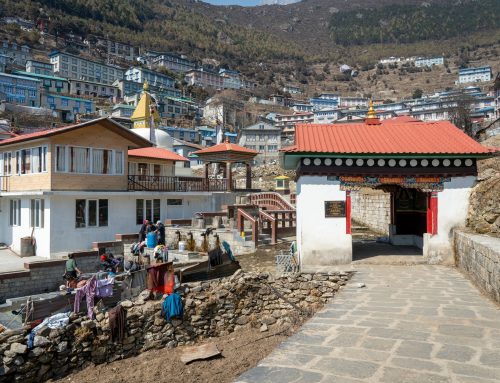
Tea houses are the accommodation throughout: small lodges with a shared dining room and basic rooms. Quality varies with altitude. Above Lobuche (4,940m), running water disappears. At Gorak Shep (5,164m), all water is carried up by yak and priced accordingly.
Electronics charging costs USD 7 to 8 per device at high camps, and only in the dining room. A solar power bank is worth the investment. Dal bhat is available at every tea house and is reliably the best value meal on the trail. At Phakding near the start it costs around Rs 550. By Lobuche the same meal runs Rs 850. Everything above Namche travels by yak or porter. The further it goes, the more it costs.
Pack light. Staff who have guided dozens of EBC treks offer consistent advice: “Lay out your items, cull it back, then cull it back again. Just because it fits doesn’t mean you should take it.”
The Views That Actually Matter
Most first-timers fixate on Base Camp as the destination. Two things worth knowing.
The first glimpse of Everest from the trail happens at the resting platform after the Hillary Suspension Bridge, well before Namche. On a clear day you look up and there it is. Trekkers consistently describe this as one of the most affecting moments of the entire route, more so than they expected.
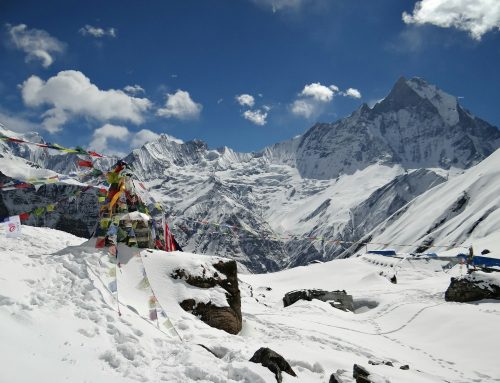
The best views of Everest are from Kala Patthar (5,545m), reached the day before or after Base Camp, and actually higher than Base Camp itself. Base Camp sits in a glacier bowl with limited sightlines. Kala Patthar is open. Don’t skip it.
What Most First-Timers Get Wrong
The most consistent pattern among first-timers who struggle: they booked too few days. A 10-day itinerary leaves no room for proper acclimatization. It works on the assumption that your body adapts on schedule and the weather cooperates. Neither is guaranteed.
Second: ignoring early symptoms because they want to finish. A headache at Dingboche that doesn’t resolve after a full rest day is a signal to descend, not to continue. This is hard advice for determined personalities. It’s also the advice that determines whether you complete the trek.
Third: the Lukla flight assumption. During peak season, Lukla flights often operate from Ramechap airport rather than Kathmandu, requiring a 4.5-hour drive with a 2am departure from the city. Confirm departure logistics with your operator well in advance.
Practical Preparation
Cardiovascular base matters more than peak fitness. Three to four months of progressive hill walking with a loaded pack is more relevant preparation than gym training. Broken-in boots are non-negotiable. Travel insurance must cover high-altitude helicopter evacuation. Without it, evacuation from EBC can cost several thousand US dollars.
Destiny Excursion has been running EBC treks for over 35 years, with full guide support and acclimatization built into every itinerary. If you’re planning your first attempt and want to understand what a responsible schedule looks like, reach out.