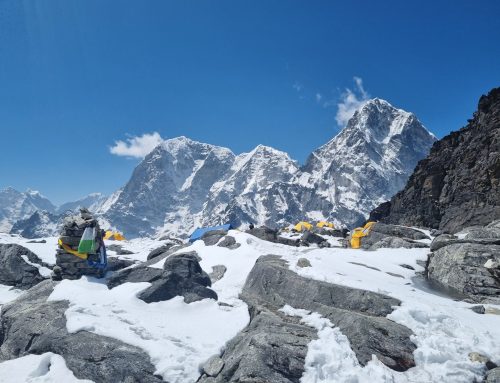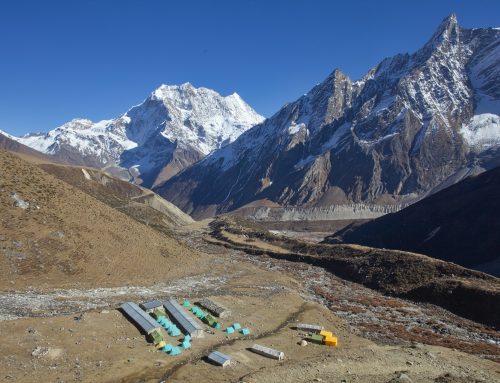
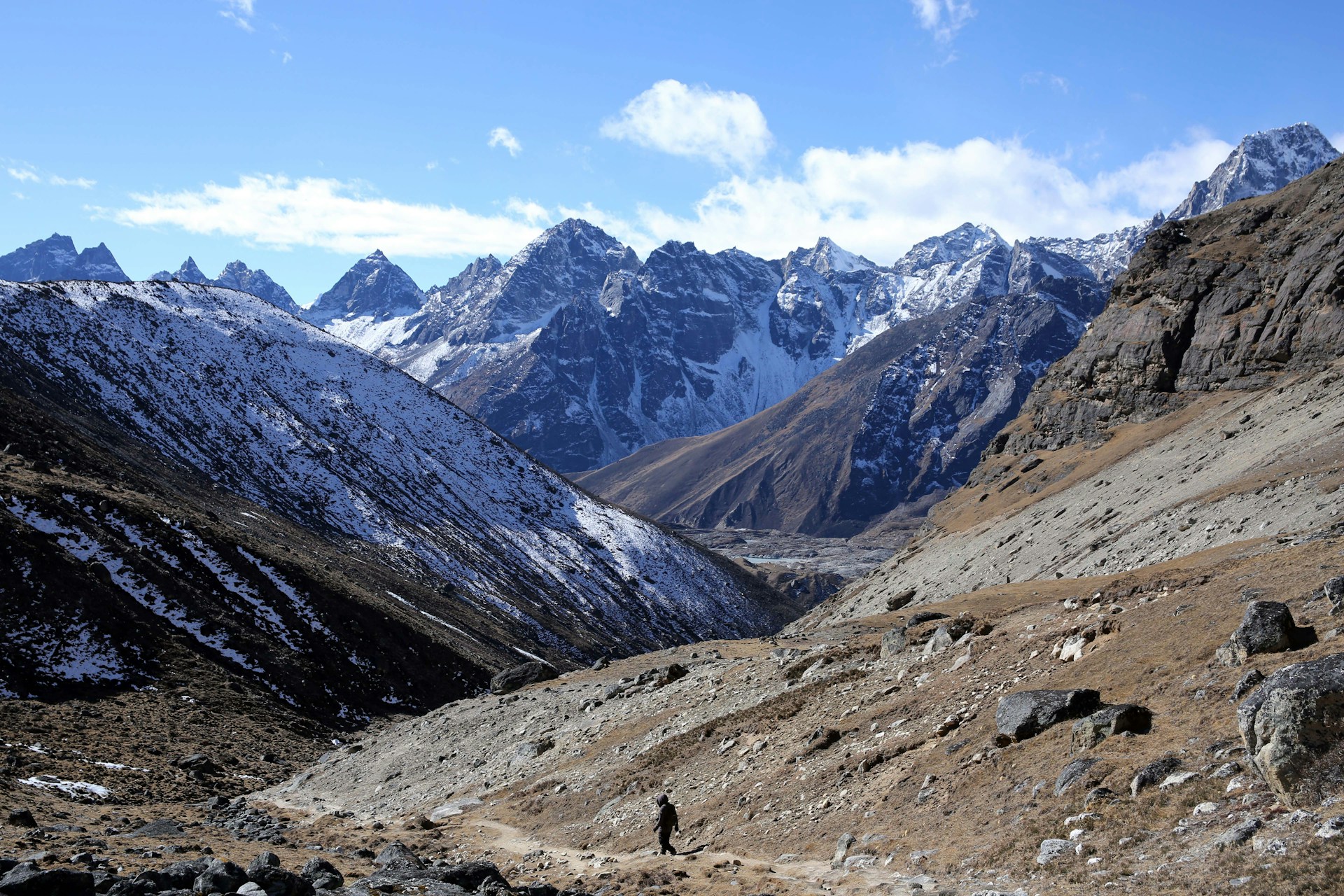
Three passes trek complete guide: Kongma La, Cho La, and Renjo La
Kongma La. Cho La. Renjo La. Three passes above 5,350 metres, crossed in sequence across the full width of the Khumbu. The circuit that links them is the most complete way to experience the Everest region, and the most demanding walk available without technical climbing. In 18 to 20 days, the Three Passes Trek covers all four major valleys of the Khumbu, visits Everest Base Camp, reaches the Gokyo Lakes, and passes through Sherpa villages the standard EBC route never approaches.
This guide covers the full route, what each pass is actually like to cross, the permits you’ll need, realistic costs, and an honest answer to the question every prospective trekker asks: is it within my reach?
What is the Three Passes Trek?
The Three Passes Trek is a 150-kilometre loop through Nepal’s Everest region that crosses Kongma La (5,535m), Cho La (5,420m), and Renjo La (5,360m). Unlike the standard Everest Base Camp trek, which follows a single corridor from Lukla to Base Camp and back, the Three Passes circuit moves through the entire Khumbu, connecting valleys that have no other through-route between them.
Most operators run the route counter-clockwise: Namche Bazaar to Thame, across Renjo La to Gokyo, south and east over Cho La to Everest Base Camp, then north over Kongma La back to Dingboche and Namche. Around 75% of trekkers on the route travel counter-clockwise. The main advantage is that Renjo La, the most forgiving of the three passes, comes first, allowing better acclimatization before the harder crossings later in the trek.
The three passes: what makes each one different
No two passes on this route are the same. Understanding each one in advance helps with preparation and realistic expectations.
Kongma La (5,535m) — the hardest
Kongma La is the highest of the three passes and the most physically demanding. It links the Chukhung valley to Lobuche on the eastern edge of the circuit. The approach is long, the altitude exposure is sustained, and it arrives on day 14 when the cumulative fatigue of two weeks above 4,000 metres has already settled in. Most guides and experienced trekkers who have completed all three rate Kongma La as the hardest single day on the entire route, not because of technical terrain but because of when it arrives.
Cho La (5,420m) — the glacier crossing
Cho La is the most technically demanding of the three. The pass involves a glacier crossing that requires crampons in the colder months from November to April. The descent on the eastern side, from the glacier down to the moraine, is steep and icy in cold conditions. A trekker who crossed Cho La in early November told us the glacier walk was unlike anything else on the route, but that the icy descent on the far side was the moment they were most relieved to have a guide with them. In good conditions, most fit and acclimatized trekkers cross without incident. In poor visibility or fresh ice, a guide’s judgment becomes a genuine safety variable.
Renjo La (5,360m) — the reward
Renjo La is the most approachable of the three in terms of terrain, though at 5,360 metres the altitude exposure is comparable to the others. The pass sits above Gokyo, and the view from the summit at sunrise, looking down over the Gokyo Lake system with Everest visible to the south, is consistently described as the most striking single moment on the entire route. It is not a consolation prize for easier terrain.
Full route and itinerary (18 days)
The standard counter-clockwise itinerary:
Days 1 to 2: Fly Kathmandu to Lukla, trek to Namche Bazaar (3,440m).
Day 3: Acclimatization day in Namche. Hike to the Everest View Hotel (3,880m) and back.
Day 4: Trek to Thame (3,800m).
Day 5: Cross Renjo La (5,360m), descend to Gokyo (4,790m).
Day 6: Rest day at Gokyo. Hike to Gokyo Ri (5,357m) for panoramic views.
Day 7: Trek to Dragnag (4,700m).
Day 8: Cross Cho La (5,420m), descend to Dzongla (4,830m).
Day 9: Trek to Lobuche (4,910m).
Day 10: Trek to Everest Base Camp (5,364m) via Gorak Shep (5,164m).
Day 11: Optional sunrise on Kala Patthar (5,545m). Trek to Dingboche (4,410m).
Day 12: Acclimatization hike near Dingboche.
Day 13: Trek to Chukhung (4,730m).
Day 14: Cross Kongma La (5,535m), descend to Lobuche (4,910m).
Day 15: Trek to Pheriche (4,240m).
Day 16: Trek to Namche Bazaar (3,440m).
Day 17: Trek to Lukla (2,840m).
Day 18: Fly Lukla to Kathmandu.
Two acclimatization days are built into this itinerary. Do not remove them to shorten the trip. Altitude sickness is the single greatest risk on this route, and rushing the acclimatization schedule is the most common reason trekkers are evacuated before completing the circuit.
How hard is the Three Passes Trek, really?
Harder than the standard Everest Base Camp trek. That is the honest answer, and most trekkers who have completed both agree. The Three Passes route adds three full days of pass crossings to an already demanding itinerary, extends the total duration by 4 to 6 days, and keeps you above 4,500 metres for longer sustained periods.
Daily hikes span 6 to 9 hours across rocky, icy, and steep terrain with regular altitude fluctuation. By the time you reach Kongma La on day 14, two weeks of cold mornings, basic tea house lodging, and frozen water bottles will have accumulated into real fatigue. The physical demands are not extraordinary for someone who trains, but they are consistent. There are no easy days above 4,500 metres.
Prior high-altitude experience helps significantly. Trekkers who have completed EBC, the Annapurna Circuit, or comparable routes with passes above 5,000 metres will manage the pace and altitude decisions more confidently.
Permits and regulations
Sagarmatha National Park Entry Permit: NPR 3,000 per person (approximately USD 22). Available at the Nepal Tourism Board office in Kathmandu or at the Monjo checkpoint on the trail.
TIMS Card (Trekkers’ Information Management System): NPR 2,000 for individual trekkers, NPR 1,000 for trekkers with a registered agency. Available at the Trekking Agencies Association of Nepal (TAAN) or at the Nepal Tourism Board office in Kathmandu.
Note: Since April 2023, Nepal requires all foreign trekkers to be accompanied by a licensed guide from a registered agency. This applies to the Three Passes Trek. Permits for solo foreign trekkers are no longer issued on most routes in the Khumbu.
Both permits are checked at multiple points on the trail. Carry photocopies alongside the originals.
Cost breakdown
Permit fees: NPR 5,000 to 6,000 total.
Guide (required): USD 25 to 35 per day, totaling USD 450 to 630 for 18 days.
Porter (optional, useful for pass days): USD 18 to 25 per day.
Kathmandu to Lukla flights (return): USD 180 to 250 per person. Prices fluctuate by season and booking timing.
Tea house accommodation: USD 3 to 8 per night. Higher at altitude above 4,000m.
Meals on the trail: USD 20 to 35 per day. Prices increase above Namche Bazaar.
Total (guided package through an agency): USD 1,500 to 2,200 for 18 days. Full-service packages: USD 2,000 to 3,500 depending on the operator and inclusions. View our trekking packages for full inclusions and pricing.
Best season to trek
Two windows work well:
October to November: Post-monsoon skies are clear, temperatures are cold but manageable, and views are at their sharpest. This is the busiest period on the trail. Tea houses can be crowded and flights to Lukla should be booked 4 to 6 weeks ahead.
March to May: The second viable window. Rhododendrons bloom on lower trails and conditions are broadly comparable to autumn, though afternoon cloud build-up is more frequent. Slightly less crowded than October.
Avoid December through February (extreme cold at altitude, Cho La glacier more hazardous) and June through August (monsoon season, limited visibility, slippery trails).
Gear and preparation
Footwear: Waterproof, ankle-supporting trekking boots with Vibram-sole grip. The Cho La glacier crossing requires solid traction on ice and compressed snow.
Sleeping bag: Rated to at least -15°C. Tea house blankets are available at most stops but are insufficient above 4,500 metres.
Layers: Thermal base layer, fleece mid-layer, insulated down jacket, and waterproof outer shell. Temperature swings from 15°C at midday to -10°C at night above 4,500m are standard.
Crampons or microspikes: Required for Cho La in cold months. Tea houses in Gorak Shep and Dzongla have these for hire, but condition varies. If trekking November through March, bring your own.
Trekking poles: Strongly recommended for all three pass descents, particularly Cho La and Kongma La.
Three Passes Trek vs Everest Base Camp
If you have completed EBC and want to return to the Khumbu, the Three Passes Trek is the natural next step. It covers the valleys and landscapes that the EBC route misses entirely, adds the Gokyo Lakes (which many trekkers describe as more visually striking than Base Camp itself), and delivers a route that feels genuinely exploratory rather than a repetition of familiar ground.
If this is your first Khumbu trek, EBC is the right starting point. The Three Passes assumes solid acclimatization instincts, comfort on exposed and icy terrain, and the physical reserve to push through difficult days late in the route. It is not a first trek. It is a very good second one.
Frequently asked questions
How fit do I need to be for the Three Passes Trek?
You should be able to hike 6 to 8 hours per day on consecutive days with a loaded pack of 10 to 12kg before the trek begins. Prior experience at altitude above 4,000 metres is a strong advantage. The route is not technically difficult, but it is physically demanding and sustained across 18 days.
Do I need a guide for the Three Passes Trek?
Yes. Since April 2023, Nepal requires all foreign trekkers to trek with a licensed guide from a registered agency. Beyond the regulatory requirement, a guide is a genuine safety asset on this route — particularly on the Cho La glacier crossing in cold conditions, where the descent requires solid navigation and the consequences of a wrong step are serious.
What permits do I need for the Three Passes Trek?
The Sagarmatha National Park Entry Permit (NPR 3,000) and a TIMS card (NPR 1,000 to 2,000 depending on whether you trek with a registered agency or independently). Both are checked at multiple checkpoints on the trail.
Can I do the Three Passes Trek without prior trekking experience?
No. This route is suited to experienced trekkers with prior multi-day high-altitude experience. Trekkers without experience above 4,000 metres should complete the Annapurna Circuit or Everest Base Camp trek first before attempting the Three Passes circuit.
Ready to plan your Three Passes Trek? Browse our Everest region packages or use the trip planning form to get a custom itinerary.