Annapurna Base Camp Trek: Complete Guide (2026)
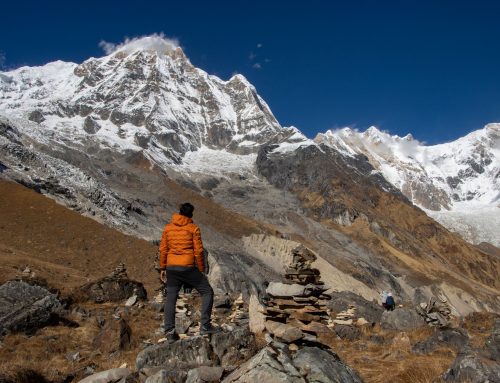
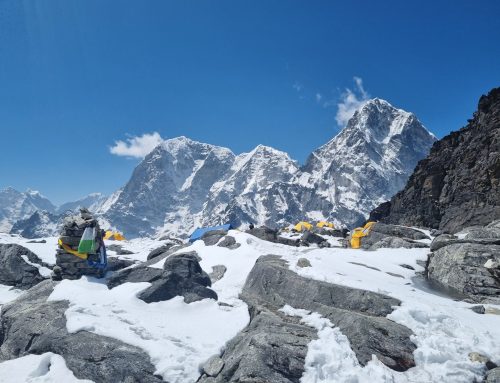
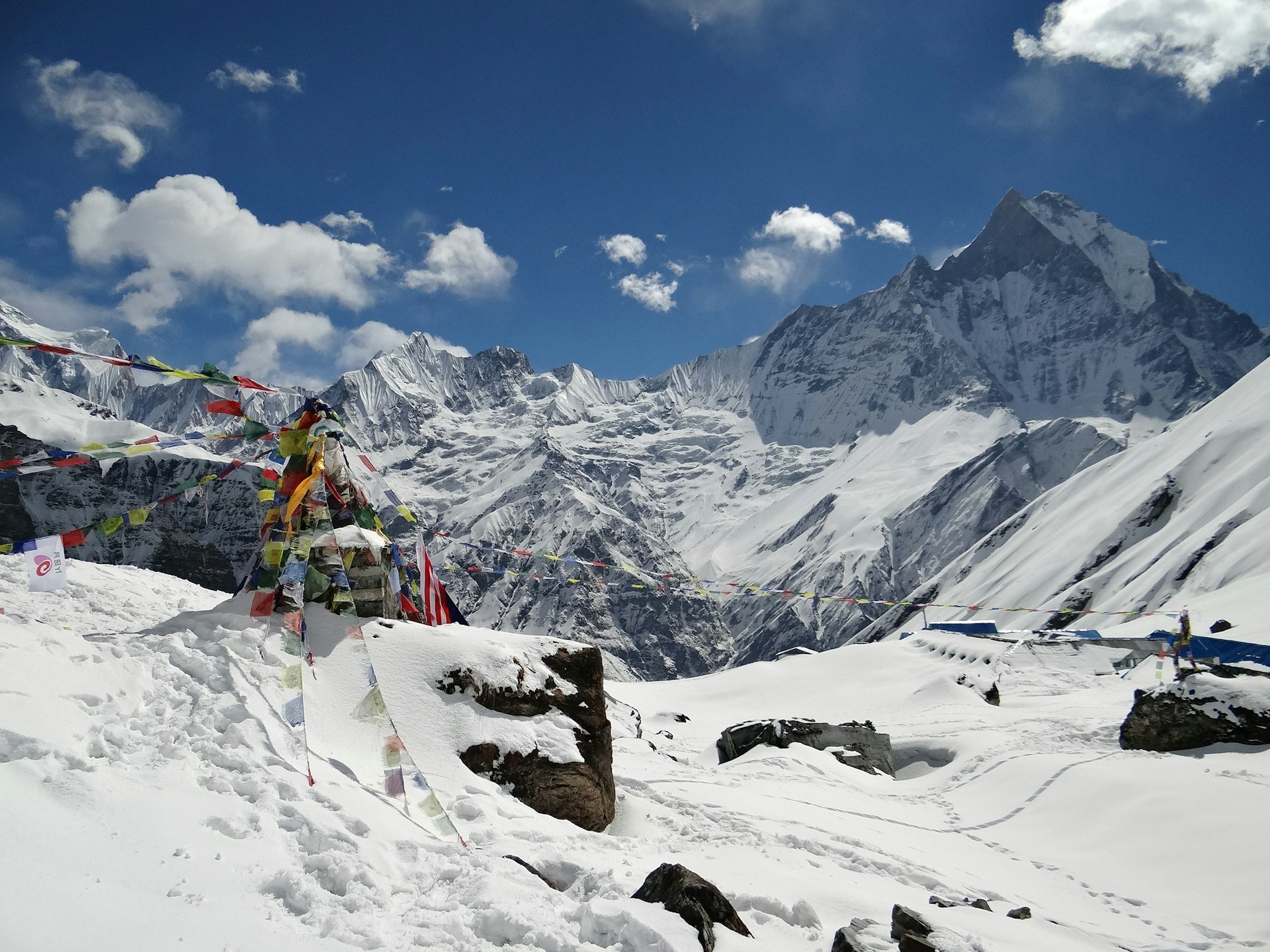
At Machhapuchhre Base Camp, at 3,700m, the valley behind you closes off. The gorge you’ve been walking through for two days disappears. What opens in front of you is not a view. It is an enclosure. Annapurna I at 8,091m, Annapurna South, Hiunchuli, Gangapurna, and the knife-edged sacred peak of Machhapuchhre stand in a ring around you on all sides. No photograph prepares you for it, because no photograph conveys the scale of being inside it rather than looking at it from outside.
That transition separates the Annapurna Base Camp trek from almost every other walk in Nepal: enclosed forest trail giving way to open glacial amphitheatre.
What makes ABC different from Annapurna Circuit
The Annapurna Circuit is a longer, more physically demanding route that circumnavigates the entire massif. It takes 14-21 days, crosses the Thorong La pass at 5,416m, and demands serious altitude preparation and fitness. ABC is a different proposition. Seven to twelve days, no pass crossing, maximum altitude of 4,130m. The Circuit shows you the Annapurna range from the outside. ABC takes you inside it.
The sanctuary geology (a glacial basin formed by the horseshoe of peaks) means the finale is unlike anything on a longer route. Trekkers who have done both describe the Circuit as the bigger undertaking and ABC as the more intense arrival.
For fit beginners with no prior high-altitude experience, ABC is the more suitable choice. The Circuit’s Thorong La demands prior acclimatisation experience. ABC does not cross any pass and gives the body a more gradual ascent, though altitude respect above 3,500m is not optional on either route.
Trek overview
- Duration: 7-12 days depending on starting point and pace
- Start: Nayapul (accessible by road from Pokhara) or directly from Pokhara via Tikhedhunga
- End: Pokhara
- Maximum altitude: Annapurna Base Camp, 4,130m
- Trail type: Teahouse trekking, no camping required
- Difficulty: Moderate, suitable for fit adults without prior trekking experience, provided the itinerary allows proper acclimatisation
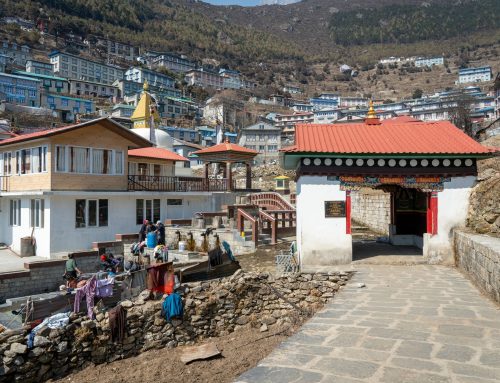
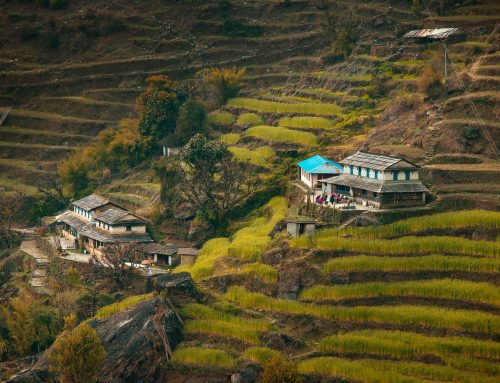
The route follows the Modi Khola river gorge upward through Gurung villages, rhododendron forest, and bamboo zones before entering the Annapurna Conservation Area’s inner sanctuary. It is one of the best-marked and most serviced trekking routes in Nepal. At peak season, teahouses fill quickly. Arriving by early afternoon matters more than trekking fast.
The route: Nayapul to ABC
The standard route runs through the following settlements:
- Nayapul / Tikhedhunga: starting point, low altitude, accessible by bus or taxi from Pokhara (1.5 to 2 hours)
- Ghorepani (2,860m): famous for Poon Hill sunrise; optional but highly recommended
- Tadapani (2,630m)
- Chhomrong (2,170m): last permanent Gurung village, last grocery stop, last solar-heated hot showers; after Chhomrong the trail enters the Annapurna Sanctuary proper
- Sinuwa (2,340m)
- Dovan (2,600m): teahouses observe a local tradition around not serving eggs or meat past this point as a mark of respect to the sanctuary deity; checkpoints enforce it informally
- Himalaya Hotel (2,920m)
- Deurali (3,200m): the Modi Khola runs loudly through the gorge and is audible through teahouse walls at night
- Machhapuchhre Base Camp (MBC) (3,700m): rest and acclimatisation stop; do not push to ABC on the same day if you feel any headache or fatigue
- Annapurna Base Camp (ABC) (4,130m): the sanctuary; sunrise here, with clouds permitting, is the reason the route exists
The descent retraces the ascent, with most trekkers cutting time by skipping the Ghorepani loop on the return. The Siwai shortcut saves roughly a full day.
For trekkers who want to extend the route through traditional Gurung villages, see our guide to Ghandruk, which can be incorporated on the descent.
Day-by-day itinerary (10 days)
A ten-day itinerary from Pokhara allows for the Poon Hill addition and unhurried acclimatisation above 3,000m. This is the version Destiny Excursion recommends for most international trekkers.
- Day 1: Drive Pokhara to Nayapul (1.5 hours), trek to Tikhedhunga (1,540m). 3-4 hours walking.
- Day 2: Tikhedhunga to Ghorepani (2,860m). The most sustained climbing day on the route. 5-6 hours.
- Day 3: Early morning Poon Hill sunrise (3,210m), then trek to Tadapani (2,630m). 5-6 hours total.
- Day 4: Tadapani to Chhomrong (2,170m). The descent and re-ascent sequence is harder than it looks on a map. The Chhomrong stone staircase is notorious on both ascent and return. 4-5 hours.
- Day 5: Chhomrong to Dovan (2,600m), passing Sinuwa and Bamboo. 5-6 hours.
- Day 6: Dovan to Deurali (3,200m), passing Himalaya Hotel. Altitude starts to register on this day. 4-5 hours.
- Day 7: Deurali to Machhapuchhre Base Camp (3,700m). Short day by design. Rest here. 2-3 hours walking.
- Day 8: MBC to ABC (4,130m), sunrise if weather permits, then descend to Bamboo or Dovan. The longest emotional day of the route. 6-8 hours total.
- Day 9: Descent to Jhinu Danda (1,760m) via Chhomrong. Hot springs at Jhinu Danda are worth the slight detour.
- Day 10: Trek to Nayapul, drive back to Pokhara.
Altitude and acclimatisation
Annapurna Base Camp is not extreme altitude by Himalayan standards. It sits well below the 5,000m threshold associated with serious altitude illness. But 4,130m is high enough to cause acute mountain sickness (AMS) in trekkers who ascend too quickly, and the tight gorge above Deurali means descent is slower than on more open routes.
The standard signs of AMS (persistent headache, nausea, loss of appetite, poor sleep) typically appear above 3,500m. Above Deurali, if a headache does not clear after two hours of rest and hydration, do not continue up. The correct response is descent. Guides on the route know this. Independent trekkers without that knowledge are the ones who get into trouble.
Three rules that apply from Deurali upward:
- Do not ascend more than 300-400m of sleeping altitude per day above 3,000m
- Stay at MBC rather than pushing straight to ABC if you feel off
- Drink 3 to 4 litres of water per day. Not a suggestion.
Permits
As of 2026, one permit is required:
- ACAP (Annapurna Conservation Area Permit): NPR 3,000 for foreign nationals (approximately USD 23). Issued at the Nepal Tourism Board office in Kathmandu or at the permit checkpoint in Bhulbhule or Nayapul. Carry a printed copy. Digital copies are not accepted at all checkpoints.
TIMS cards are no longer required for Annapurna trekkers. The permit system was simplified in 2023 and ACAP now covers the conservation charge that previously required both documents. Many older guides and websites still mention TIMS; disregard them.
A mandatory licensed guide rule remains in effect. Independent solo trekking without a registered guide is not permitted on the ABC route.
Best seasons
March to May (spring): The rhododendron forests between Ghorepani and Tadapani are in full bloom from mid-March. Skies are generally clear in the mornings before clouds build in the afternoon. Peak season means teahouses fill fast. Book ahead or arrive at accommodation early.
October to November (autumn): Post-monsoon clarity. The air is clean after months of rain and views from MBC and ABC are at their most reliable. Slightly cooler than spring at altitude. The busiest season for a reason.
June to September (monsoon): Not recommended. The Modi Khola gorge is leech territory from June onward. Trails become slippery, sections wash out, and cloud cover at the sanctuary is thick enough that many trekkers reach 4,130m and see almost nothing.
December to February: Snow above 3,000m makes the trail difficult and occasionally impassable above Deurali. MBC and ABC can be reached in January but conditions require experience and proper cold-weather gear. Not the season for first-time trekkers at altitude.
Trail conditions
The ABC route is one of Nepal’s most infrastructure-dense trekking trails. Teahouses run from Nayapul through to ABC, and you will not sleep in a tent unless you choose to. Rooms are basic: a single bed, blankets, minimal insulation above 3,000m. But the trail is never remote in the logistical sense.
The path is well-marked and wayposted. Navigation errors above Chhomrong are unlikely. The terrain varies considerably: stone staircases through villages, suspension bridges over the Modi Khola, rhododendron forest on the mid-altitude section, rocky open ground above Deurali. Good ankle support matters more on this route than raw fitness.
Porters carry all supplies into the teahouses using namlo straps (head-supported baskets). Above the lower settlements, there is no other transport. Teahouse menus narrow as you gain altitude: dal bhat, pasta, soup, and instant noodles above Dovan. Bring your own flavouring if that matters to you.
What to Pack for Annapurna Base Camp
Teahouses provide blankets and pillows, but the quality varies. Pack light. You carry everything yourself, or pay a porter.
- Clothing layers: thermal base, fleece mid-layer, waterproof shell. Temperatures drop below 0C at ABC even in October.
- Trekking boots: broken-in, ankle support. New boots cause blisters on stone steps.
- Trekking poles: especially useful on the descent from Deurali. Optional on the way up, essential on the way down.
- Sleeping bag liner: most teahouses have blankets but a liner adds warmth and hygiene.
- Water treatment: purification tablets or a filter. Boiled water costs money at every teahouse. Tap water above Chhomrong is not safe.
- Sunscreen and lip balm: UV intensity increases above 3,000m. Most trekkers underestimate this.
Cost Breakdown
These figures are for independent trekkers. Guided packages bundle most costs.
- ACAP permit: NPR 3,000 (around USD 23). No other permits required since 2023.
- Teahouse accommodation: USD 5 to 15 per night. Budget rooms exist but expect shared bathrooms and thin walls.
- Meals: USD 4 to 12 per meal. Dal bhat is cheapest and most filling. Prices rise at higher elevations.
- Total independent budget: USD 300 to 500 for an 8 to 10 day trek, excluding international flights and Kathmandu costs.
- Guided packages from Pokhara: USD 600 to 1,200 depending on group size, guide quality, and inclusions. Covers permits, accommodation, meals, guide, porter. Browse our Annapurna trekking packages for full inclusions.
Should You Hire a Guide or Use an Agency?
The ABC trail is well-marked and most trekkers complete it without a guide. But there are three situations where hiring through an agency makes sense.
- AMS judgment: a guide who has done the route many times recognises early altitude sickness symptoms. Solo trekkers sometimes push through warning signs.
- October teahouse access: peak season means full lodges. Agencies with local contacts can hold rooms. Independent trekkers arriving late sometimes sleep on dining room floors.
- Post-monsoon trail changes: landslides shift paths every year. A guide who walked it two weeks ago knows the current route. Apps and older guidebooks may show washed-out sections.
Frequently Asked Questions
How fit do you need to be for Annapurna Base Camp?
No technical climbing involved. You need to handle 6-8 hours of walking per day on uneven stone paths with a daypack. If you can comfortably walk uphill for 2 hours without stopping, you can do this trek. Regular cardio training for 4-6 weeks before departure helps.
Can you do Annapurna Base Camp in 7 days?
Yes, but it is rushed. The standard route from Nayapul takes 7-9 days. Starting from Jhinu Danda by jeep cuts one day. Most trekkers find 8-10 days more comfortable and allow an acclimatisation rest at Deurali.
Is altitude sickness a risk above Deurali?
ABC sits at 4,130m. Acute mountain sickness is possible but uncommon if you ascend gradually. The standard itinerary builds in enough time for most trekkers to acclimatise. One trekker told us: “I felt mild headaches at MBC the first evening, but after sleeping well and taking it slow the next morning, I was fine at base camp.” Descend immediately if you have severe headache, vomiting, or confusion.
Is Annapurna Base Camp worth it?
The amphitheatre at base camp (Annapurna I, South, Hiunchuli, Machhapuchhre all visible in a single sweep) is one of the clearest mountain panoramas in Nepal. One trekker told us: “I had done Everest Base Camp the year before. ABC felt more enclosed, more immediate. The mountains were closer. It was a different kind of overwhelming.” Whether that is worth 8 days of walking is your call. Most people who do it come back with an answer.
Ready to plan your Annapurna Base Camp trek? Browse our Annapurna packages or use the trip planning form to get a custom itinerary.